Manufacturing operations combine product liability exposure, heavy equipment risk, complex supply chains, and elevated workers' compensation costs into one of the most challenging insurance profiles in commercial lines. We build programs that address the full risk spectrum — from raw materials to finished product, from factory floor to end user.
Manufacturers face a uniquely broad risk profile. Your products enter the stream of commerce and can cause harm years after they leave your facility. Your equipment represents millions in capital investment. Your employees work with heavy machinery, chemicals, and repetitive processes that generate frequent injuries. And your supply chain creates contractual obligations that cascade insurance requirements through every link.
Product liability is the defining coverage for any manufacturer. Under California's strict liability doctrine established in Greenman v. Yuba Power Products and codified in the California Civil Code, manufacturers can be held liable for defective products regardless of negligence. This means a plaintiff doesn't need to prove you did anything wrong — only that your product was defective and caused injury.
California recognizes three types of product defects: manufacturing defects (the product deviated from its intended design), design defects (the design itself is unreasonably dangerous), and failure to warn (inadequate instructions or safety warnings). Your product liability coverage must address all three.
Product liability claims can emerge years after sale, making occurrence-based coverage essential. California's statute of limitations for product liability is generally two years from discovery of injury, but the discovery rule means claims can surface long after the product was manufactured and sold.
Standard commercial property policies exclude mechanical and electrical breakdown of equipment — the very losses that can shut down a manufacturing operation. Equipment breakdown (formerly "boiler and machinery") insurance covers the cost to repair or replace machinery that fails due to mechanical breakdown, electrical arcing, motor burnout, or pressure vessel failure. It also covers lost income during the repair period.
For manufacturers whose production depends on CNC machines, injection molding equipment, industrial ovens, compressors, or assembly line robotics, equipment breakdown coverage is essential. A single motor failure on a critical production line can cost tens of thousands in repair and hundreds of thousands in lost production.
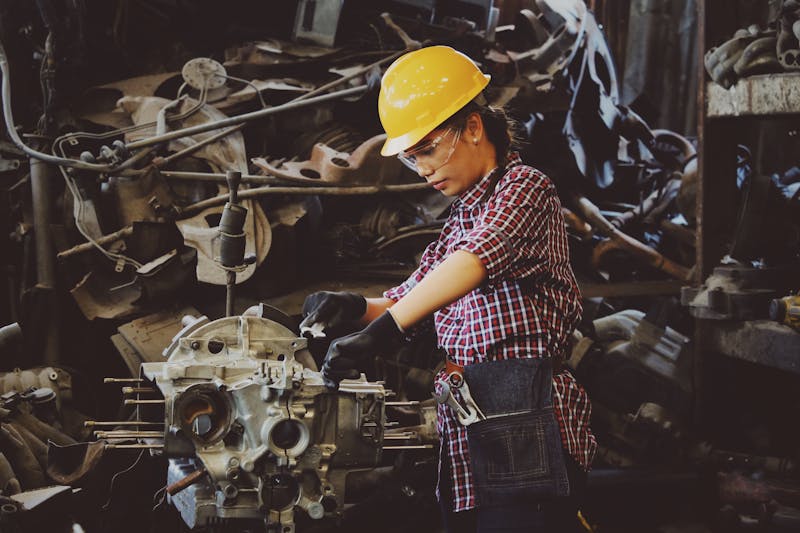
Manufacturing workers' compensation costs are driven by the physical nature of the work and the machinery involved. Common class codes for California manufacturers include:
The most frequent manufacturing workers' comp claims involve: repetitive motion injuries (carpal tunnel, rotator cuff), laceration from cutting equipment, crush injuries from presses and machinery, chemical exposure, and back injuries from manual material handling. OSHA standards governing manufacturing include lockout/tagout (29 CFR 1910.147), machine guarding (1910.212), hazard communication (1910.1200), and respiratory protection (1910.134).
Cal/OSHA enforces these standards in California and may impose additional requirements. Manufacturing facilities are subject to both scheduled inspections and complaint-driven investigations. A strong safety program — formalized in a Cal/OSHA-compliant IIPP — is both a regulatory requirement and a direct driver of insurance costs. We provide manufacturing-specific IIPPs that address the hazards unique to your operation.
Manufacturers that use chemicals, solvents, paints, or generate waste streams face pollution exposure that standard GL policies exclude. Environmental liability insurance covers cleanup costs, third-party bodily injury and property damage from pollution events, and regulatory defense costs. California's Department of Toxic Substances Control (DTSC) enforces stringent environmental regulations that can impose cleanup liability on current and former facility owners and operators.
Manufacturing property insurance must account for the full value of your facility, equipment, raw materials, work in process, and finished goods inventory. Underinsurance is common in manufacturing because equipment values appreciate or replacement costs increase faster than policy limits are updated. We conduct annual valuation reviews to ensure your limits keep pace with your actual replacement costs.
When a covered loss shuts down your production line, business interruption insurance replaces lost income and covers continuing expenses (rent, payroll, loan payments) during the restoration period. For manufacturers, the restoration period can extend months if specialized equipment must be custom-built or imported. Extended business interruption coverage — which continues paying after the physical damage is repaired until revenue returns to pre-loss levels — is essential for operations with long ramp-up periods.
If a key supplier or customer suffers a loss that interrupts your revenue stream — even though your own facility is undamaged — contingent business interruption coverage responds. This is increasingly important as supply chains become more concentrated. A single-source supplier fire can shut down your production as effectively as a fire in your own plant.
Products in transit — whether raw materials coming in or finished goods going out — need coverage beyond what your property policy provides. Inland marine insurance covers goods while they're being transported, stored off-premises, or at temporary locations. For manufacturers shipping nationally, coordinating property and transit coverage eliminates the gaps that often exist when goods are between locations.
Core coverages include product liability, commercial property (including equipment breakdown), workers' compensation, commercial general liability, commercial auto, inland marine/transit, and business interruption. Depending on operations, you may also need environmental/pollution liability, cyber liability, and umbrella/excess coverage. Most manufacturers need $2M-$5M in total liability limits.
Premiums depend on product type, annual sales, distribution channels, and claims history. Low-risk products (non-ingestible industrial components) may cost $2,000-$8,000/year for $1M limits. Consumer products, food/beverage, and children's products carry significantly higher rates — $10,000-$50,000+ depending on exposure. Products sold internationally add complexity.
Equipment breakdown (formerly boiler and machinery) insurance covers repair or replacement costs when machinery fails due to mechanical breakdown, electrical arcing, motor burnout, or pressure vessel failure. Standard property policies exclude these losses. It also covers lost income during repairs. For manufacturers dependent on specialized equipment, this coverage is essential.
Your CGL policy's products-completed operations coverage responds to product liability claims. However, limits, exclusions, and the specific policy form determine what's actually covered. California's strict liability doctrine holds manufacturers liable for defective products regardless of negligence, making adequate product liability limits critical.
Key standards include lockout/tagout (29 CFR 1910.147), machine guarding (1910.212), hazard communication (1910.1200), respiratory protection (1910.134), and noise exposure (1910.95). Cal/OSHA may impose additional California-specific requirements. All manufacturers must maintain a written IIPP under California Labor Code Section 6401.7.
If your operations involve chemicals, solvents, paints, or waste streams, yes. Standard GL policies exclude pollution claims. California's DTSC can impose cleanup liability on current and former facility operators. Even historical contamination discovered during property transactions can trigger liability. Environmental coverage protects against cleanup costs, third-party claims, and regulatory defense.
Talk to an advisor who actually understands your industry. No call centers, no generic quotes — a real conversation about your business.
Start a conversation