Commercial property in California faces unique exposures: wildfire risk that varies dramatically by location, earthquake potential, and business interruption that can exceed the value of the physical asset itself. We build property programs that address actual California exposures and ensure business continuity when disasters strike.
Commercial property insurance consists of multiple interconnected coverages that must be coordinated to avoid coverage gaps and to ensure that coverage limits align with the actual replacement cost of your assets.
Building coverage protects the structure itself — walls, roof, foundation, built-in fixtures, and permanently affixed equipment. The distinction between building coverage and personal property coverage is critical: a furnace is building coverage (part of the structure), but a moveable HVAC unit is personal property. If you misclassify assets, you create coverage gaps.
Building coverage is typically written on a "replacement cost" or "actual cash value" (ACV) basis. Replacement cost reimburses the full cost to repair or replace; ACV reduces reimbursement by depreciation. For most commercial properties, replacement cost is essential — ACV leaves a gap that the property owner must fund from personal capital.
BPP coverage protects equipment, inventory, fixtures, and improvements that are not permanently affixed. This includes machinery, computer equipment, furniture, inventory, and tenant improvements (if you're a tenant). BPP coverage is often underwritten separately from building coverage and may require a detailed inventory or equipment schedule.
A key exposure in BPP is "coinsurance" — if your coverage limit is less than the full replacement cost of your property, any claim payment is reduced proportionally. For example, if your property is worth $1,000,000 but you only insure it for $500,000 (50% coinsurance), a $100,000 claim is paid at only $50,000 (50% of the claim amount). This is a penalty for underinsurance, and it applies even to partial losses.
Always insure property on a replacement cost basis, not ACV. The difference between replacement cost and ACV is depreciation — often 30-50% of the replacement value. If your $500,000 building burns and you're insured on ACV rather than replacement cost, depreciation might reduce your recovery to $300,000, leaving you $200,000 short to rebuild. For new properties, this gap is smaller. For older properties, it's substantial.
An "agreed value" endorsement removes the coinsurance penalty. You and your insurer agree on the value of your property, and that agreed value is binding — you cannot be penalized for underinsurance if a loss occurs within that agreed value. For properties with fluctuating value or for businesses where replacement cost is difficult to estimate, agreed value is essential protection against the coinsurance penalty.
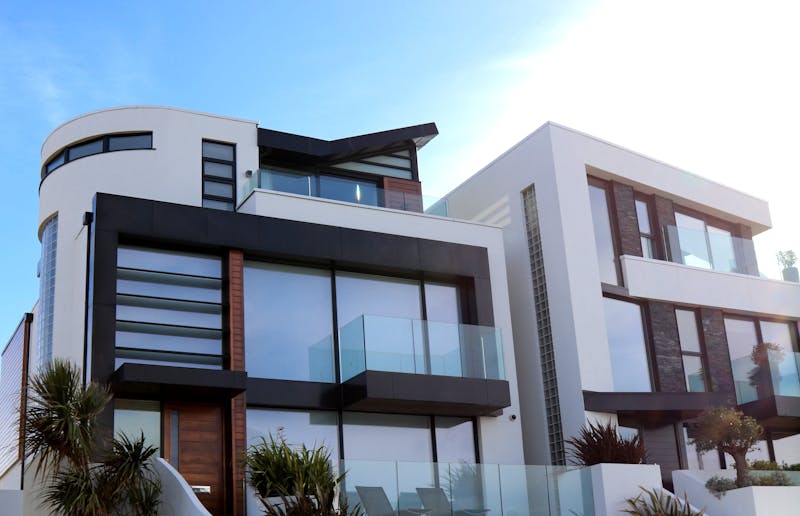
Property insurance goes beyond the physical assets themselves. Business continuity is often more valuable than the building — if your facility is destroyed but you can continue operations elsewhere, business interruption coverage bridges that gap.
Business interruption coverage reimburses lost income when a covered property loss forces you to suspend operations. If your warehouse burns and you can't fulfill orders for three months, business interruption covers lost profit during those three months plus the reasonable additional expenses to relocate operations. This coverage is often the most valuable component of a property program because lost income can quickly exceed the replacement cost of the physical building.
Business interruption requires detailed documentation of your business operations: gross profit (revenue minus direct costs), payroll, and typical recovery time to return to pre-loss operations. We work with clients to establish accurate business interruption limits based on actual operational data.
Equipment breakdown covers the cost to repair or replace mechanical equipment that suddenly fails: HVAC systems, electrical equipment, refrigeration, boilers, elevators, or data center infrastructure. Equipment breakdown also includes business interruption coverage — if your refrigeration fails and you lose inventory, equipment breakdown covers both the repair cost and the lost inventory value.
For data-intensive operations, equipment breakdown must include coverage for data recovery and system restoration in addition to hardware replacement. The value of downtime often exceeds the value of the physical equipment.
Inland marine coverage protects equipment and property in transit or at multiple locations. A construction contractor with equipment at multiple job sites, a business with multiple office locations, or equipment in temporary storage — these require inland marine coverage. Standard property policies only cover assets at the specifically insured premises, not equipment in transit or at other locations.
Standard commercial property policies exclude earthquake and flood damage. California's earthquake risk is substantial — the U.S. Geological Survey estimates a significant probability of major earthquakes in California within the coming decades. Earthquake coverage must be purchased as a separate endorsement or policy, usually with a substantial deductible (10-15% of the coverage limit).
Flood coverage is available through the National Flood Insurance Program (NFIP) or private insurers. Standard property policies exclude all water intrusion except sudden, accidental rupture of a water supply line. If your property is in a flood zone, flood coverage is essential.
For California properties, we recommend earthquake coverage based on location and asset value. The cost is often reasonable relative to the exposure, and a major earthquake can result in losses exceeding millions of dollars.
California's wildfire risk has fundamentally changed the commercial property insurance market. Insurers have exited the California market or significantly restricted coverage in high-risk areas. Understanding wildfire exposure and alternative markets is essential for California property owners.
California's escalating wildfire losses have caused major insurers to exit the market or impose strict limitations in high-risk areas. Properties in State Responsibility Areas (SRA) and California's highest fire hazard severity zones face either dramatic premium increases or insurability challenges. Some properties are uninsurable in the private market entirely.
Insurers use sophisticated risk models to classify fire hazard based on location, brush density, past burn history, and proximity to known fire corridors. A property that was insurable five years ago may be uninsurable today due to increased fire history in the area. We monitor insurability changes and proactively communicate with clients when coverage becomes challenging.
When a property becomes uninsurable in the private market, the California FAIR Plan (California Insurance Fair Access and Reform) provides coverage of last resort. FAIR Plan coverage is more expensive than private insurance, has higher deductibles, and covers building and contents only (not business interruption or additional exposures). However, FAIR Plan coverage ensures that property owners in high-fire-risk areas can obtain some level of coverage.
Being on the FAIR Plan is not permanent — if you complete defensible space improvements and reduce your fire hazard, you may regain access to private insurance. We work with clients to reduce fire risk and potentially transition back to private insurance markets when possible.
California's defensible space requirements mandate clearing brush and dead vegetation within specific distances from structures (typically 5-30 feet, with some requirements extending to 100+ feet in specific jurisdictions). Maintaining defensible space reduces insurance premiums, improves insurability in the private market, and provides real fire risk mitigation.
For properties on the FAIR Plan, maintaining defensible space is often a condition of coverage renewal. We help clients understand defensible space requirements in their specific jurisdiction and connect them with local fire departments that provide free defensible space assessments.
Replacement cost reimburses the full cost to repair or replace an asset. Actual cash value reduces reimbursement by depreciation. For a $500,000 building, ACV might reduce recovery to $300,000 after depreciation. Always insure on replacement cost basis — ACV leaves a gap you must fund personally.
Coinsurance penalizes underinsurance. If your property is worth $1,000,000 but you only insure it for $500,000, any claim is reduced by 50%. A $100,000 claim becomes $50,000. An agreed value endorsement removes this penalty by locking in an agreed value with your insurer.
Yes, if a property loss would force you to suspend operations. Business interruption covers lost income during reconstruction, which often exceeds the value of the physical property. Proper limits require detailed analysis of gross profit, payroll, and typical recovery time.
Equipment breakdown covers repair or replacement of mechanical equipment (HVAC, refrigeration, electrical, boilers) that suddenly fails. It includes business interruption — if your refrigeration fails and you lose inventory, equipment breakdown covers both the repair and the inventory loss.
No. Earthquake and flood are excluded from standard policies. Earthquake coverage must be purchased as a separate endorsement, usually with a 10-15% deductible. Flood coverage is available through the NFIP or private insurers. For California properties, both are important given the state's risks.
The FAIR Plan provides coverage of last resort for properties that become uninsurable in the private market due to wildfire risk. FAIR Plan coverage is more expensive and has higher deductibles than private insurance, but it ensures coverage availability for high-risk properties.
California's escalating wildfire losses have caused major insurers to exit high-risk areas or impose strict limitations. Properties in high fire hazard severity zones face premium increases or insurability challenges. Defensible space improvements can reduce fire hazard and improve insurability in the private market.
Talk to an advisor who actually understands your industry. No call centers, no generic quotes — a real conversation about your business.
Start a conversation